

Main Content
Main Content Area
Home > Personalized Diet > Stress Care Diet
Diet failing every time?
Do you identify with these situations?
-
Relieving stress with spicy food, alcohol, or late-night snacks
-
Eating more than usual on days when you are stressed
-
Frequent mood swings and inability to get a good night's sleep
-
Unable to stop snacking on chips, chocolate, etc.

-
If you identify with even one? Daeat's Stress Care Diet is necessary
Stress increases appetite, leading to obesity, depression, sleep disorders, and binge eating disorders. In particular, if the pattern of relieving stress with late-night snacks, spicy food, and alcohol is repeated, you enter a state where you cannot control your appetite on your own and are bound to keep gaining weight.
You must first treat conditions caused by stress, such as depression, insomnia, and binge eating, to enable weight loss.
-
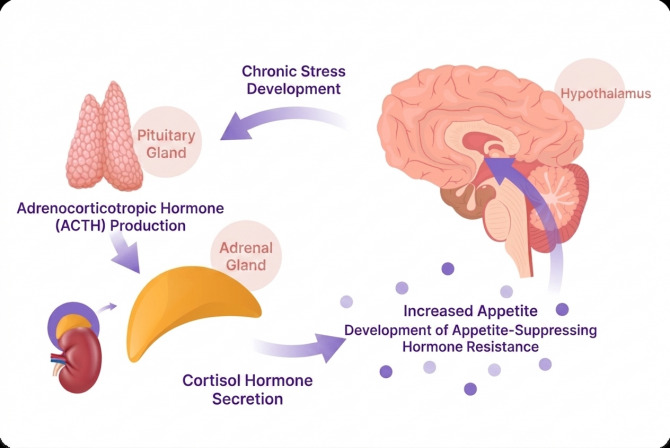

Why stress-related illnesses are especially dangerous
-
- 01Inducing Metabolic Syndrome
- According to various studies, the excessive secretion of cortisol, a hormone released when stressed, leads to the accumulation of visceral fat, which has been shown to cause metabolic syndromes such as hyperlipidemia and hypertension.
-
- 02Occurrence of Leptin Resistance Obesity
- When cortisol is excessively secreted, resistance to 'leptin', the hormone that suppresses appetite, develops, leading to 'leptin resistance obesity' where one exhibits excessive appetite beyond what is needed, resulting in weight gain.
-
- 03Causing Diseases Due to Reduced Immunity
- According to a US research team, patients with high stress levels show 20-30% fewer white blood cells than those who do not. Chronic stress affects not only autoimmune diseases but also cancer development, making management essential.
Daeat Stress Care Diet Method
Stress causes excessive appetite, worsening obesity and inducing lowered immunity and metabolic syndrome. Daeat Korean Medicine Clinic conducts a healthy diet through the Stress Care Package.
※ Package composition may vary depending on the patient's individual situation and health condition.